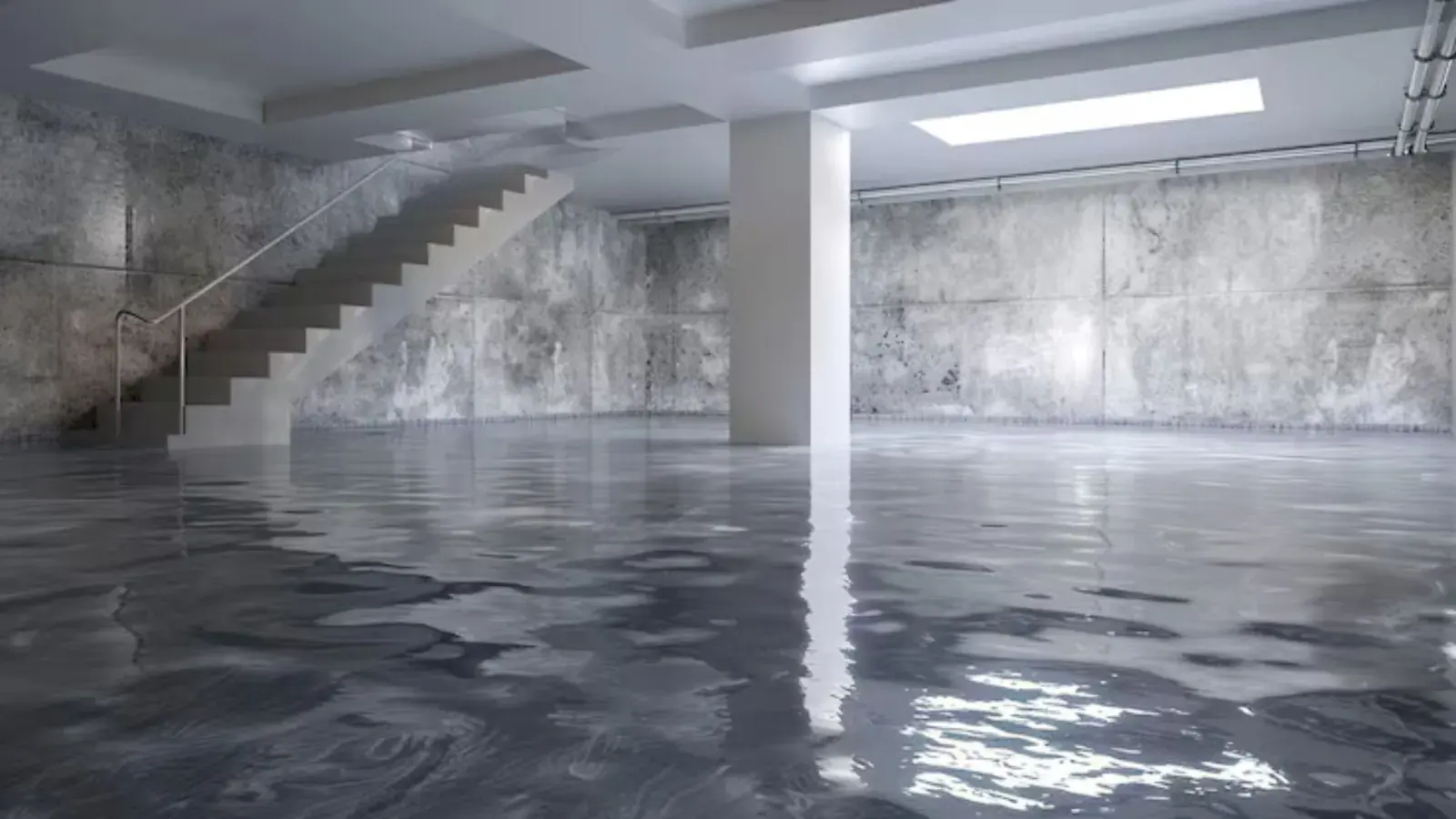
Waterproof paint is the first thing most people reach for when a basement wall looks damp. Sometimes it is the right call. Often it hides the symptom while the cause keeps working behind the paint. The difference is whether water is simply moving through the masonry as vapor or being pushed in by groundwater pressure. Paint can handle the first. It cannot handle the second.
What waterproof paint actually does
Masonry waterproofing paint is a thick coating that fills the pores in block and concrete. It resists moisture that wicks through the wall and reduces dampness and musty odor. It does not make a wall structurally watertight. Think of it as a raincoat, not a dam.
Where the wall is only slightly damp, dry the area, clean off efflorescence and apply the coating as directed. You may notice an improvement. Where the wall is wet after every rain, you will probably see the paint blister and peel within a season.
| What you see | Likely cause | Paint fixes it? |
|---|---|---|
| Slightly damp wall, no standing water | Vapor moving through masonry | Often helps |
| White powder on the wall | Efflorescence from moisture passing through | Only after the moisture is controlled |
| Wet wall after heavy rain | Groundwater pressure | No |
| Water at the floor and wall joint | Pressure at the footing | No, needs drainage |
| Peeling paint and bubbles | Water pushing from behind | No, the coating is failing |
| Damp wall with no rain link | Pipe leak or condensation | No, find the source |
Not sure what is making the wall wet? Call for a quick assessment.
Call (860) 397-8103Test before you paint
Tape a square of plastic wrap, about a foot across, to the wall and seal the edges. Wait a day or two. If moisture shows on the wall side of the plastic, water is coming from outside. If it forms on the room side, the cause is humidity in the room.
That small test saves a lot of work. It tells you whether to dehumidify the room or deal with water entering the wall.
Fix the outside first
Most wet basements improve when you control water at the surface. Clean the gutters, send downspouts several feet away from the foundation and slope the soil away from the house. Window wells should drain freely. If a downspout ties into an underground pipe, check that it is clear.
Only after those steps are done does it make sense to judge what water is still getting in. If the answer is still more than a trace, interior drainage and a sump pump are the next tools, and our basement waterproofing page explains how they work.
Why this matters for Windsor basements
Windsor's town ordinance restricts new structures in 100-year floodplains, and the town's hazard planning documents list flooding in 1984, 2003 and 2005 along Mill, Meadow and Deckers Brooks. Batchelder Road, Pleasant Street and River Street are named as areas at risk of flooding. In those neighborhoods, a seasonal high water table is likely to push water against the foundation, and paint alone will not keep up.
If you are not sure whether your lot is in a floodplain, ask the Windsor town offices. Flood zone status affects what you can change and which insurance you may need.
Source type: Capitol Region Council of Governments hazard mitigation plan annex for Windsor.
When interior drainage is the better answer
An interior drain collects water at the footing and sends it to a sump pit, where a pump moves it outside. It relieves the pressure that pushes water through the floor and walls. Paint can still go on later for appearance and mild moisture, once the water has somewhere to go.
A sump pump with a battery backup completes the system. Without a way to remove water, a drain just fills a pit.
Is it water or a plumbing leak?
Not every wet wall is groundwater. A leaking supply line, a failed drain or condensation on a cold water pipe can wet a wall. If dampness shows up on a dry day or near a pipe, check the plumbing. Our leak detection service can confirm whether a line is leaking before you spend on waterproofing.
We work with basements across the region, including Windsor Locks and South Windsor, where brook flooding and culvert problems are part of the picture.
Mistakes people make with basement coatings
Painting over efflorescence or loose paint is the most common one, because the coating bonds to the powder instead of the wall. Applying it to a wall that is wet is another. A third is skipping crack repair, since a coating bridges hairline gaps poorly. A fourth is expecting a coating to resist water pushing from outside.
Follow the label for humidity and temperature during application, and allow the full cure time before you put anything against the wall. If the coating peels in the first season, treat it as a sign of pressure, not a bad batch of paint, and look for the source.
A simple moisture test and what to do with the result
Place a small humidity gauge in the basement and record the reading for a week. Readings that stay high point to condensation and room humidity, and a dehumidifier plus better air flow may be all you need. Readings that spike after rain, or walls that darken after a storm, point to water entering from outside.
Photograph the walls and mark the spots with painter's tape after each storm. A few photos and notes turn a vague worry into a map, which helps any contractor see the pattern and recommend the right fix instead of the biggest one.
Frequently asked questions
Not if water is under pressure. It works on mild dampness, not on seepage after rain.
Water is pushing from behind the coating. The source of the water needs attention.
Yes. Loose paint and efflorescence prevent the new coating from bonding.
The town's hazard plan lists Batchelder Road, Pleasant Street and River Street as areas at risk of flooding.
Interior drainage with a sump pump, plus good gutters and grading.
Plumbing problem that cannot wait? Call the 24/7 line.
Call (860) 397-8103