A damp basement is not one problem. Water can come from the ground through the walls or floor, from a leaking pipe, from a failed sump pump or from a backed-up drain. Before anyone sells you a system, someone should figure out which one it is. Call (860) 397-8103 to talk through what you see. Active flooding is handled by our 24/7 line.
Waterproofing is plumbing work when it involves drains, sump pits and pumps. It is not a substitute for fixing gutters and grading, which matter just as much.
Start with the source
| What you see | Likely source | First step |
|---|---|---|
| Damp patches on walls after rain | Groundwater pressure, poor grading, gutters | Check downspouts, grading, then consider interior drainage |
| Water at the floor and wall joint | Hydrostatic pressure at the footing | Interior perimeter drain and sump pump |
| Constant dampness with no rain link | Leaking pipe or high humidity | Leak detection and dehumidification |
| Water from the floor drain | Backed-up sewer or sump overflow | Drain cleaning, check backwater valve |
| White powder on masonry | Efflorescence from moisture passing through | Control the water source, then clean |
Why Windsor basements get wet
Windsor sits at the confluence of the Farmington and Connecticut Rivers and includes brooks such as Mill, Meadow, Deckers, Phelps and Rainbow. Town hazard planning documents cite flood-related events in 1984, 2003 and 2005 and list Batchelder Road, Pleasant Street and River Street as flood-prone. Groundwater rises after wet seasons, and low basements feel it first.
Windsor also restricts new structures in 100-year floodplains. If your lot is near a brook or river, the water table and the flood risk both matter, and interior drainage paired with a sump pump is often the right fit.
Water coming through the floor or walls? Call for an assessment.
Call (860) 397-8103Interior drainage systems
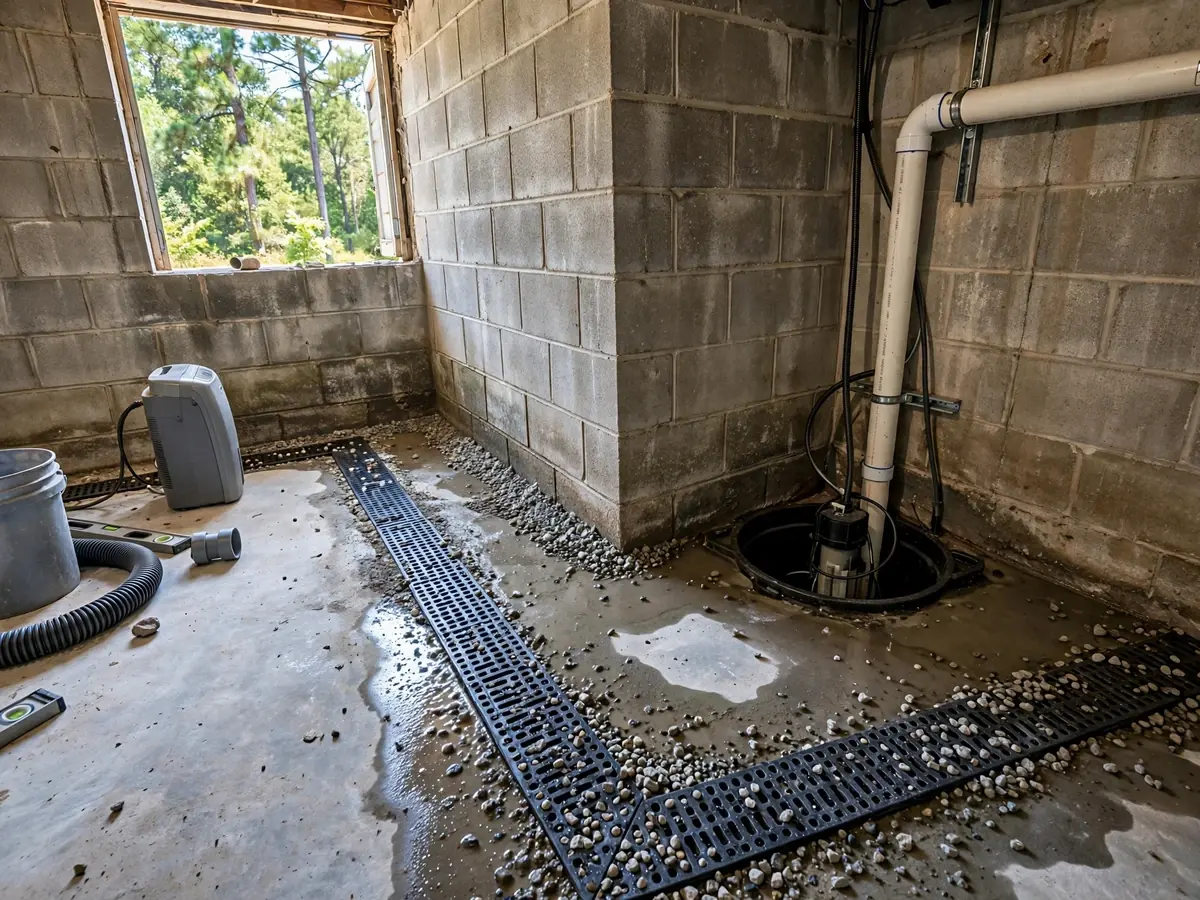
An interior system collects water at the footing and sends it to a sump pit. A channel or drain pipe runs along the floor perimeter, usually under a section of the slab that is cut open. The water flows to the pit, and a pump moves it outside. It controls water that has already reached the foundation.
It does not stop water from entering the soil around the house. It gives that water a path out, so pressure does not push it through the floor. A battery backup keeps the system working through storms and outages, and sump pump installation and repair explains the equipment in detail.
Waterproof paint and surface coatings
Brush-on waterproofing paints can help with minor dampness, but they do not hold back water under pressure. If water pushes through the wall, the coating blisters and peels. We do not recommend paint as a fix for active seepage. It makes sense after the water source is controlled.
Outside fixes that matter
Clean gutters, downspouts that discharge several feet from the house and soil that slopes away from the foundation solve many wet basements without any plumbing. Window wells need clear drains. If a downspout ties into an underground pipe, that pipe can clog, and we can inspect it.
If we suspect a leaking supply line instead of groundwater, we start with leak detection. Floor drain backups need drain cleaning.
What we look at during an assessment
We start outside the house, with gutters, downspout outlets and soil slope. Inside, we look for the pattern of moisture, whether it follows the walls, the floor joint or a pipe. We check the sump pit, the pump and the discharge, and the floor drains. Then we explain what we think is happening and what, if anything, needs doing.
Sometimes the answer is cheap, such as extending a downspout. Sometimes it is a system. We say which, and we show you why, so you can decide how much to do and in what order.
Safety steps for a flooded basement
Do not step into standing water if the basement has a panel, outlets or a running appliance. Water and electricity can kill. Leave the area and shut power off at the main panel only if you can reach it dry. If you cannot, call the electric utility or 911. Do not run a wet-dry vacuum in standing water.
Keep children and pets out, since floodwater can carry sewage and chemicals. Wear boots and gloves when you do enter. Photograph the damage before you move anything, and keep wet items for your insurer to see. When to call a plumber: if water is rising, if a sump pump has failed or if sewage is involved.
Frequently asked questions
Yes. Active flooding goes to the 24/7 line. Call (860) 397-8103, keep away from standing water near outlets and appliances, and we will arrange service. Same-day appointments are offered when available.
It controls water that reaches the foundation by giving it a path to the pump. It works best along with good grading and gutters.
For minor dampness, it can help. For water under pressure, paint fails. Fix the water source first.
Usually yes. The drain carries water to a pit, and the pump moves it out.
In areas that flood, or where outages happen with storms, a backup is wise. See our sump pump page for options.
Yes. We serve all of Windsor and nearby towns.
Need a plumber for this right now? The line is answered around the clock.
Call (860) 397-8103