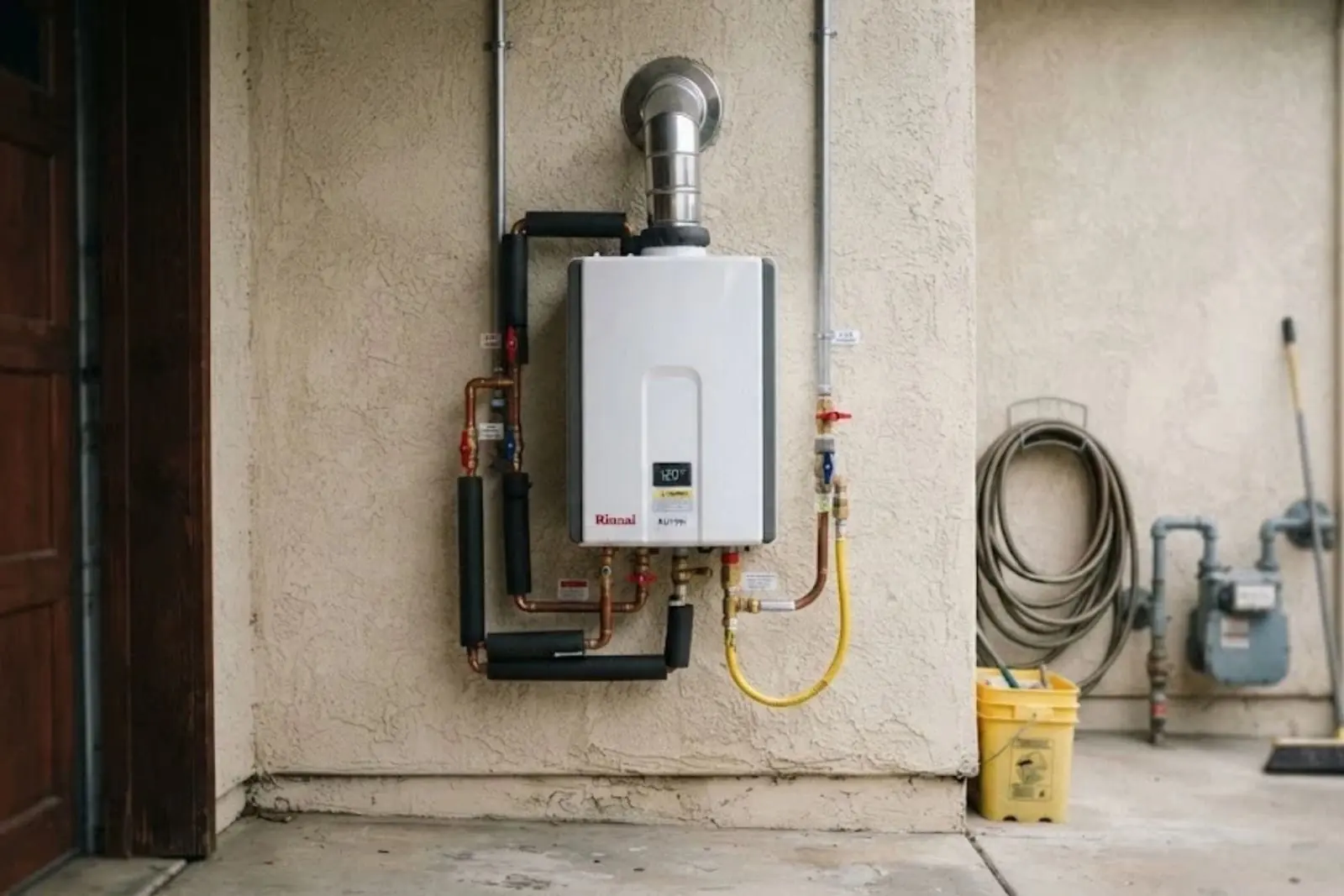
A tankless water heater heats water only when you open a tap, so it never runs out the way a tank can. That also means every part is working hard. Scale, sensor failures and flow problems show up as error codes, temperature swings or a unit that shuts off. For installs, flushes and repairs, call (860) 397-8103.
If you have no hot water at all and the unit is dead, our 24/7 line is available. For routine questions, same-day appointments are offered when available.
Is tankless right for your home?
| Consideration | In favor of tankless | Against |
|---|---|---|
| Space | Wall-mounted, frees floor area | Needs a clear wall and venting path |
| Hot water supply | Continuous, no recovery wait | Flow limits if many fixtures run together |
| Install cost | Long lifespan with maintenance | Higher upfront cost, may need a larger gas line |
| Maintenance | Annual flush keeps it efficient | Neglect leads to scale and failures |
Gas versus electric tankless
Gas units deliver higher flow and are common in whole-house installs. They need a gas line with enough capacity, a vent rated for the appliance and condensate drainage for high-efficiency models. Electric units are simpler to vent but can demand a lot of electrical capacity, sometimes beyond what an older panel can give.
We check the gas meter capacity, line size, venting route and electrical panel before recommending a model. A unit that looks perfect on paper can be impossible in a particular house.
Thinking about going tankless? Call to talk through your layout.
Call (860) 397-8103Descaling flushes and why they matter
Minerals in water coat the heat exchanger over time. The coating reduces efficiency, causes error codes and shortens the life of the unit. A flush circulates a descaling solution through the unit and then clears it with clean water. Most manufacturers recommend an annual flush, and more often where scale is heavy.
We do not state Windsor's water hardness from memory. The MDC publishes an annual water quality report, and you can test your tap. If scale shows on faucets and kettles, your tankless unit needs the flush more often.
Common problems we fix
Error codes often point to ignition failure, flame sensor problems, vent blockages or flow sensor faults. Cold water sandwiches, where hot water briefly turns cold, can come from short-cycling or low flow. Inconsistent temperature between fixtures can come from pressure imbalances or a failed mixing valve.
Backup power matters too. Tankless units need electricity to run even if they burn gas, so a power outage leaves you without hot water. If that worries you, ask about a backup supply.
Replacing a tank with a tankless unit
Owners often convert to reclaim floor space in a tight utility closet or garage. An old tank vent can be reused only if it meets the new unit's requirements, and usually it does not.
If you want a straightforward tank replacement instead, see water heater installation. If the old tank is already failing, water heater replacement is the faster path.
Warning signs between flushes
Do not wait for the annual flush if you notice a drop in output, longer waits for hot water, a rising number of error codes or a rumbling noise from the unit. Check the inlet water filter screen, if your model has one, and rinse it. A clogged screen limits flow and is a simple fix.
If hot water turns suddenly cold in the middle of a shower, or the unit shuts off and restarts, note what was running at the time. That detail helps the plumber find a flow, venting or sensor cause quickly.
Code questions for a tankless conversion
Tankless units often change the gas line, the vent and the electrical supply. Connecticut's State Building Code uses the International Plumbing Code (IPC) as its plumbing standard. The 2022 state code adopts the 2021 IPC, and the state is working on a newer edition. Ask the Windsor building department what each change requires. Source: Connecticut Office of the State Building Inspector.
Frequently asked questions
Most manufacturers say about once a year, and more often where scale is heavy. A flush keeps the heat exchanger clean and avoids error codes.
Most need electricity for controls and fans, even gas models. A power outage stops them unless they are on a backup supply.
Short draws, low flow or a failing sensor can cause it. We check flow rate, inlet screens and the sensors.
Often yes, if the unit is sized for your demand. Gas models usually handle more simultaneous use than electric ones.
We work on the common residential brands. Call with your model number and we will tell you if we can help.
Yes. Both towns are in our coverage, and each has its own page: East Granby and Windsor Locks.
Need a plumber for this right now? The line is answered around the clock.
Call (860) 397-8103