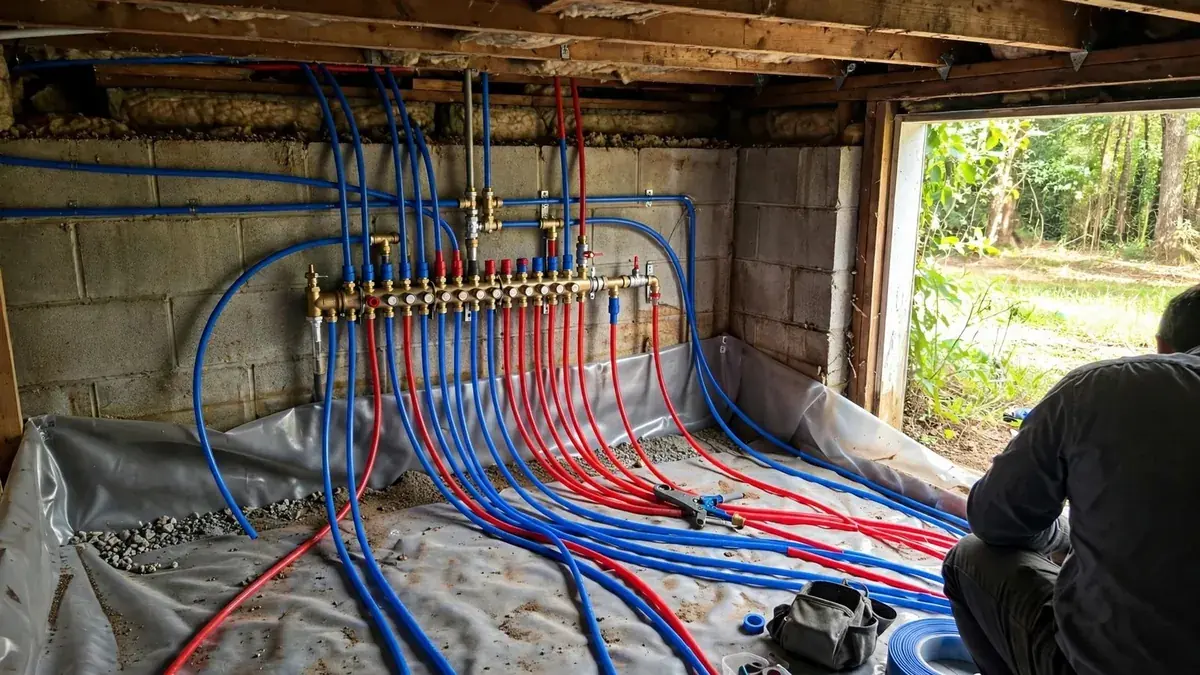
Repiping replaces the water supply pipes inside a house, from the main entry to each fixture. It is a major job, so it makes sense only when repair has stopped being enough. If you have a burst pipe now, see burst pipe repair. If you are weighing a bigger fix, call (860) 397-8103 and a plumber will talk through your options.
Signs a house needs repiping are specific. Rust-colored or metallic-tasting water, pressure that drops across the house, multiple leaks in a few years, or pipes that show green crust or white scale all point that way.
Signs your pipes are at the end of their life
Warning signs worth a call
- Brown or rusty water at several taps Galvanized steel corrodes from the inside and sheds rust.
- Pressure loss throughout the house Mineral buildup and rust narrow the pipe interior.
- Repeated pinhole leaks One leak is a repair. A pattern means the pipe walls are thin.
- Visible corrosion and green crust Failing copper or brass fittings show it.
- Pipe material nobody likes Some older plastic systems and fittings are known problems.
Materials compared
| Material | Strengths | Tradeoffs |
|---|---|---|
| PEX | Flexible, fewer joints, good freeze tolerance, faster install | Not for outdoor sun exposure, needs correct fittings |
| Copper | Long track record, durable, widely accepted | Higher material cost, more joints, can corrode in aggressive water |
| CPVC | Inexpensive, corrosion resistant | Can become brittle with age and heat |
| Galvanized steel | Found in older homes | Corrodes inside, plan to replace it |
Wondering if your pipes are worth saving? Call for an assessment.
Call (860) 397-8103How a repipe is done
We map the layout, plan access points and protect floors and furniture. Most repipes use small openings in walls and ceilings, since PEX can snake through framing. Existing pipes are cut off, new lines are run to each fixture, and connections are made at valves and appliances. We test the new system before closing access holes.
Water is off for part of the day, so plan accordingly. We stage the work so you keep as much water as possible, and we explain how long the job should take for your layout.
Drains, cast iron and other pipes
Repiping usually refers to supply pipes. Drain, waste and vent lines are a separate system. Cast iron drains in older homes can crack, rust through or clog with scale, and a camera shows their condition. If a drain stack or a buried line is the problem, ask about sewer line repair or plumbing installation, which covers drain rerouting during a remodel.
A repipe is a good time to deal with other issues. We can add shutoff valves at fixtures, replace the main shutoff and install a pressure regulator if pressure is high.
Windsor houses and what we find
Windsor has houses from many eras, and the plumbing inside them reflects each decade's habits. Older homes near Windsor Center and along Palisado Avenue may carry galvanized or early copper, and later additions may mix materials. Mixed metals can corrode where they meet if the right dielectric fittings are not used.
We do not guess hardness or water chemistry for your tap. The MDC publishes its water quality report, and a test gives you a clearer picture. Water quality and pipe material together decide what lasts longest in your house.
Planning for the days of the job
Clear access to the basement, utility room and any walls where we will work. Move furniture away from wall access points and cover items that are sensitive to dust. Plan for the water to be off for part of each working day, and keep a supply of drinking water on hand.
Tell us about any past leaks, patched pipes or remodels. That history helps us find hidden runs and avoid surprises. After the repipe, we test pressure, check each fixture and walk you through the main shutoff and any new valves.
The code behind a repipe
Whole-house repiping replaces supply lines that the plumbing code governs. Connecticut's State Building Code uses the International Plumbing Code (IPC) as its plumbing standard. The 2022 state code adopts the 2021 IPC, and the state is working on a newer edition. Ask the Windsor building department about permits and inspections for your scope. Source: Connecticut Office of the State Building Inspector.
Frequently asked questions
It depends on the size of the house and access. Many homes take a few days. We give you an estimate of the schedule after we see the layout.
Usually small access holes, not full demolition. We plan routes to minimize damage, and we explain what will be opened before we start.
Both work well. PEX is faster and handles freezing better, while copper has a long track record. We recommend one based on your house and your priorities.
Permit rules vary, so ask the Windsor building department what applies. We do the work to code and can describe what an inspector will check.
Yes. Call (860) 397-8103 any hour. The line is answered 24/7, and we can stabilize a leak while you decide on a larger project.
Yes. See our pages for Bloomfield and Windsor Locks.
Need a plumber for this right now? The line is answered around the clock.
Call (860) 397-8103