A sewer clog that returns every few months is telling you something. Grease and paper clog a healthy pipe only occasionally. A pipe that clogs again and again usually has a defect that catches waste, such as a root intrusion, a sag or a cracked joint. Cleaning clears the blockage. Repair removes the reason for it. This guide explains how to tell which one you need.
A clog or a defect?
| Pattern | What it suggests | Next step |
|---|---|---|
| One backup, then years of normal use | Isolated clog from grease or flushed items | Clean and adjust habits |
| Backup every few months | A defect catching waste | Camera inspection |
| Backups during heavy rain only | Inflow from a crack or a stressed system | Camera and discuss backwater protection |
| Slow drains plus lush grass over the line | A leak or crack | Camera and locate |
| Backups after a nearby dig or heavy traffic | Pipe shifted or cracked | Camera and repair |
How we find the cause
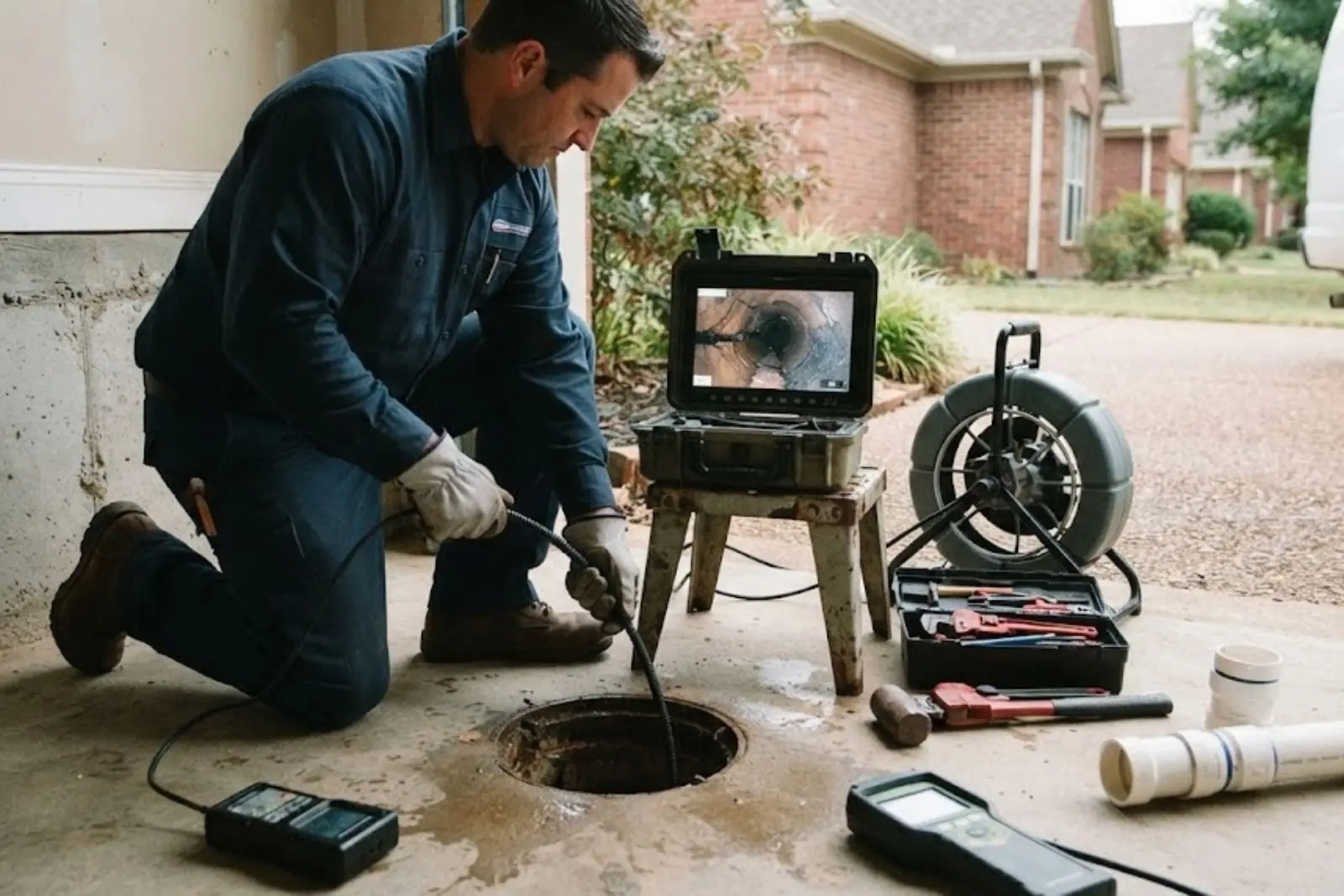
We start by clearing the clog so the camera can travel. Then we send a camera through the pipe from the cleanout, recording as we go. We look for roots at joints, standing water in low spots, cracks, offsets, scale and any place where the pipe changes shape. A locator on the camera head tells us how deep the pipe is and where it runs.
That footage turns a guess into a plan. You see what we see, and we explain what each finding means.
Tired of repeat clogs? A camera visit shows the cause.
Call (860) 397-8103Repair options
A root-filled joint can be cut clear and then sealed with a liner or repaired by replacing a short section. A sag in a short run may be corrected by replacing that section with pipe set at the right slope. A fully collapsed pipe needs replacement. Cracks along a longer run may suit lining, as described on our sewer line repair page.
We explain the tradeoffs, including disruption to the yard and what each option costs you in time. You choose. We do not push the biggest job when a smaller one will hold.
Soil, water and sewers in the Windsor area
Windsor's town documents describe erodible soils on the Farmington River banks and a number of brooks, including Mill, Meadow and Deckers. Ground that moves or stays wet is hard on buried pipes. If your lateral runs through such ground, shifts and offsets are more likely, and a camera inspection every few years is sensible.
In East Hartford, the town's plan describes backwater from the Connecticut River affecting neighborhoods near Porter Brook and Milbrook, and the town installed a backflow prevention device at the Porter Brook outfall in 2020. In a house with repeated backups during river high water, a backwater valve on the sewer lateral is worth discussing.
Source type: Capitol Region Council of Governments hazard mitigation plan annexes for Windsor and East Hartford.
Who is responsible for which part
Windsor is an MDC member town. In general, the owner maintains the lateral from the house to the connection, and the utility maintains the main in the street. Ask the MDC to confirm the boundary for your address before you pay for repair, and ask whether any permit or inspection applies. Permit rules vary, so also ask the Windsor building department.
Check any plumber you hire on the Department of Consumer Protection's eLicense lookup.
Stop the next clog
After a repair, keep grease out of drains and flush only toilet paper. If trees are part of the problem, ask an arborist about root options. Schedule a camera check in a few years to confirm the work holds. For cleaning without repair, see sewer line cleaning.
We repair and clean sewer lines in Windsor Locks and East Hartford as well as Windsor.
What a repair quote should include
A good quote names the problem, the location and the depth of the defect, and it refers to the camera footage. It describes the method, whether spot repair, lining, bursting or replacement, and lists what will be restored and what will not. It says who pulls permits and schedules inspections, and what the warranty covers.
Ask what happens if the crew finds something different once the ground is open. A plan for that, in writing, keeps the job from growing without your approval. If you want a second opinion, the footage makes that easy.
What you can do before the plumber arrives
Locate your cleanout and clear the area around it. Note which fixtures are affected and when the trouble started. Avoid running water, and do not pour chemicals into the drains. If you have photos or records from earlier visits, find them, since they help trace a pattern.
If you know of nearby digging, tree removal or heavy construction, mention it. Ground movement near a lateral can shift pipe, and the date of that work may line up with the start of your backups.
Frequently asked questions
A defect such as roots, a sag or a cracked joint is the usual reason. A camera inspection shows it.
No. Spot repair and lining limit digging. Collapsed pipe usually needs replacement.
A valve in the lateral that closes when flow reverses, preventing sewage from coming back into the house.
Usually the property owner, with the utility maintaining the street main. Confirm with the MDC.
Use the Connecticut Department of Consumer Protection's eLicense lookup.
Plumbing problem that cannot wait? Call the 24/7 line.
Call (860) 397-8103